

Bad credit, no credit, or a past repo doesn’t automatically end the search for financing. Second-chance auto loans are generally designed for borrowers with credit challenges, often including scores in the 501-600 range and sometimes lower. For second-chance car loans in Las Vegas, review the interest rate, monthly payment, and total financing cost before deciding.
That can make the monthly payment feel like the whole decision, but the full loan term matters too. A payment that fits your budget should leave room for regular expenses, while the interest rate and loan length affect the total you pay.
This guide explains how second-chance auto financing works and what may strengthen an application. Learn how to set a realistic payment budget, prepare income and residence documents, and review loan terms before deciding. We’ll also explain how Globul Cars’ financing options serve buyers with different credit histories and income types, so you can take the next step with a clearer plan.
Key Takeaways
- Second-chance financing may suit borrowers with credit scores in the 501-600 range and sometimes lower, but it generally costs more than traditional financing.
- Set a payment limit that fits your budget, and consider how a down payment can reduce the amount you finance.
- Gather income and residence documents. We accept different income types, including cash, 1099, W-2, and trust income, as well as forms of ID such as passports and international IDs.
- Organize details about your income and employment history to help show your ability to manage a payment.
- Review the interest rate, loan term, and total financing cost together; a cosigner with stronger credit may improve loan terms.
What is second-chance auto financing?
Second-chance auto financing gives buyers with credit challenges another way to finance a vehicle. In Las Vegas, compare the lender, payment schedule, and total financing cost, not just whether financing is available.
Second-Chance Financing Basics
Second-chance financing is generally designed for borrowers whose credit history makes traditional financing harder to obtain. It may serve people with scores in the 501-600 range, and sometimes lower. A dealer may arrange financing through a lender, with approval and terms based on the buyer’s application and vehicle. Compare the interest rate, monthly payment, and overall amount financed before choosing a loan.
In-House and Credit Union Financing
With in-house financing, a dealership finances the vehicle directly instead of arranging a loan through an outside lender. We don’t offer in-house financing; we work with multiple lenders and flexible financing options. Credit unions are another possible route. Some offer incentives for on-time auto loan payments, such as interest-rate reductions or cash rewards. Compare the incentive’s conditions with the loan’s full repayment terms.
Financing With Bad or No Credit
Bad-credit and no-credit financing may consider more than a credit score. Before applying, review your credit reports and dispute errors that may be lowering your scores. Paying down existing debt, especially high-interest credit-card debt, can reduce your debt-to-income ratio. Prequalification can help you compare potential rates without impacting your credit. These steps may strengthen your application and help you assess available terms.
Financing After Repossession
A past repossession can make financing more challenging, but second-chance options are intended for borrowers with credit difficulties. Be prepared to discuss your current income, existing debts, and transportation needs as part of the application. Focus on a vehicle and payment that fit your present budget. Compare the interest rate, payment schedule, and total cost rather than accepting terms based only on approval.
For Nevada buyers, dealer-arranged financing is subject to applicable consumer-credit disclosure and fair-lending requirements, as well as the written financing contract. Review the APR, amount financed, payment schedule, total payments, and default terms before signing. Keep a copy of the agreement so you can refer to its exact terms later.
To strengthen an application and pursue a lower rate, correct credit-report errors, reduce high-interest debt, and use prequalification to compare potential rates without impacting your credit. Organize your income and debt details before applying, then weigh the offered rate against the vehicle and repayment term.
Budgeting for a car payment
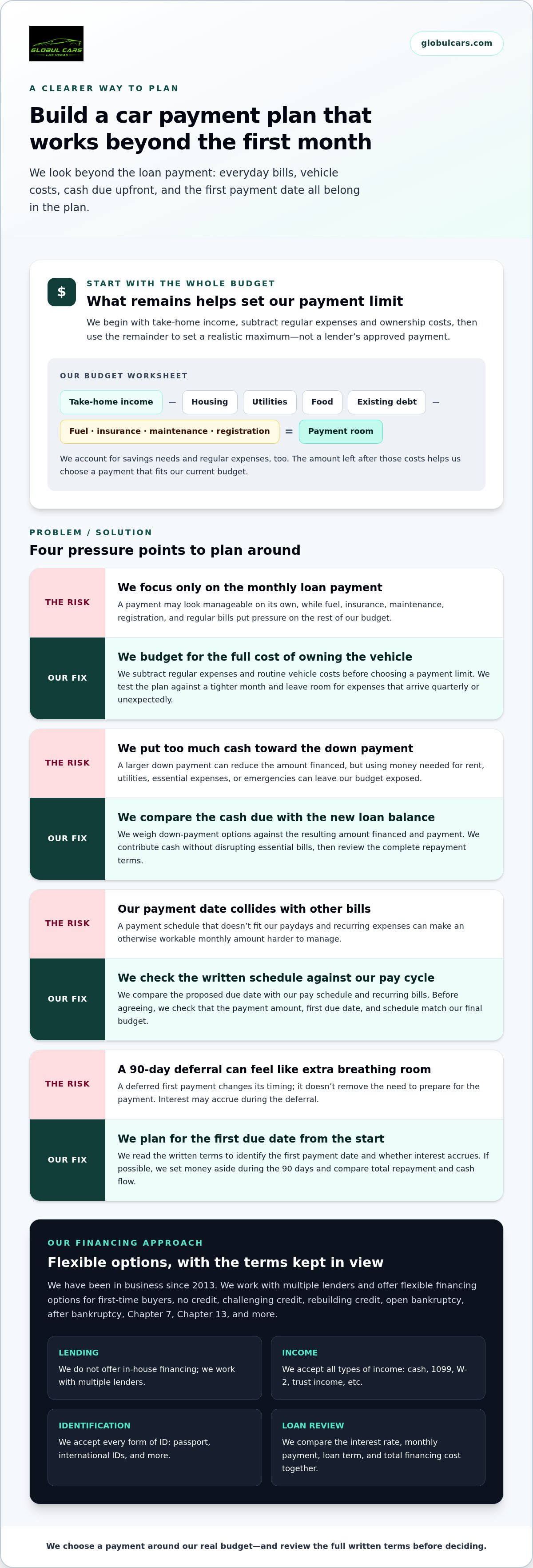
Build your budget around the full cost of owning a vehicle, not just its loan payment. In Las Vegas, start with take-home income, regular bills, and savings needs before setting a comfortable payment limit.
Down Payment Requirements
A down payment reduces the balance you finance, which can lower the amount subject to interest. The amount required depends on the financing offer and vehicle, so compare the cash due at signing with the resulting loan balance and payment. Avoid using money needed for rent, utilities, or essential expenses just to increase your down payment.
Use a simple worksheet before reviewing vehicles. List take-home income, housing, utilities, food, existing debt payments, and other regular expenses. Then account for costs beyond the loan, such as fuel, insurance, maintenance, and registration. Subtract those expenses first. The remainder helps set a realistic maximum, rather than treating a lender’s approved payment as a budget recommendation.
Flexible Payment Options
Payment schedules and due dates can vary by financing offer. Compare the proposed due date with your pay schedule and recurring bills. For example, if you’re paid twice monthly, make sure the installment won’t collide with rent or another large expense. Review the written schedule, payment amount, and any terms for changing a due date before committing.
Test your budget against a tighter month, too. Count irregular income only when you can reasonably rely on it, and leave room for expenses that arrive quarterly or unexpectedly. If the planned payment works only when every month goes perfectly, choose a lower amount or a less costly vehicle. A workable budget accounts for the payment and routine ownership expenses together.
A down payment and monthly payment work as a pair. Paying more upfront can reduce the amount financed, but using all your savings may leave too little for emergencies. Compare down-payment options with the resulting balance and payment. Focus on the cash you can contribute without disrupting essential bills, then assess the financing based on its complete repayment terms.
A 90-day payment deferral affects the timing of the first scheduled payment, not the need to plan for it. Read the written terms to identify the first due date and whether interest accrues during the deferral. Set aside money during those 90 days if possible, so the first installment doesn’t arrive without preparation. Include the deferral period when comparing total repayment and cash flow.
Before signing, check that the payment amount, first due date, and schedule match your budget worksheet. Recalculate using the final loan terms, not an earlier estimate. If the payment leaves no room for fuel, insurance, or regular bills, revise your vehicle budget before agreeing. A clear monthly plan helps you choose financing you can manage beyond the first payment.
Proof of income and residence
Prepare income and address information before completing a financing application. Lenders use these details to understand your financial situation and review your application. Keep records organized, current, and consistent with the information you provide. A clear document packet can make it easier to respond if the application requires supporting details.
Commonly prepared records include:
- Pay stubs showing wages from W-2 employment.
- Bank statements that help document income deposits.
- Proof of your current residence.
- A clear account of income from other sources.
Different income sources call for a clear explanation. If you earn W-2 wages, organize recent pay stubs together. For 1099 work, keep relevant income information easy to review. Cash income, trust income, and other sources can also be part of your financial picture. We accept all types of income, including cash, 1099, W-2, and trust income. Present your information consistently, so the application reflects how you earn and receive income.
Residence documentation connects your application to your current address. Prepare a document showing where you live, and check that its address matches the one on your application. If you recently moved, note the change and keep your current information together. Don’t mix an old address with current records without explaining the difference. Consistent details make your application easier to follow.
Keep identity information separate from proof of residence. Globul Cars accepts every form of ID, including passports and international IDs. An ID establishes identity, while a residence document shows your address. Keep both ready, and don’t assume one document serves both purposes. Before submitting, compare the name and address across your application and records. Correct any mismatch so the lender sees a consistent file.
Use a simple preparation sequence. First, list each income source and how often it arrives. Next, gather pay stubs or bank statements that reflect those sources. Then prepare current residence proof and your identification. Finally, review every application field against those records. For example, if your application lists W-2 wages and trust income, make sure both sources appear accurately in your income summary.
Buyers with low income can still prepare a complete picture of their finances. Include each income type and organize the records you have, rather than relying on one source alone. Separate regular income from occasional deposits in your notes. This helps you describe your financial situation clearly. Keep copies of submitted records so you can answer follow-up questions using the same information.
Before applying, check three details: your name, your address, and your income sources. Make sure each appears consistently across the application and supporting records. Keep pay stubs, bank statements, proof of residence, and identification accessible. This preparation gives you a practical starting point for a financing review.
Income and employment history
A steady income and employment history can help demonstrate reliability when applying for auto financing. Show the pattern clearly, especially if your pay varies from week to week or by season. For example, separate regular wages from occasional overtime in your budget notes. This gives you a more realistic view of what you can afford each month.
Review your work and income timeline before applying. Note your current role, recent job changes, and any periods without work. If your employment changed recently, prepare a simple explanation of the transition. Moving from hourly work to contract work, for example, may change when income arrives, even if your overall earnings remain similar.
Consistency matters in the details you provide. Make sure application dates and income descriptions match your records. If you receive variable pay, review several pay periods instead of relying on the strongest one. A commission-based worker, for instance, can separate base earnings from commissions when planning a manageable payment. Don’t treat an unusually strong month as normal income.
Employment gaps don’t have to make your financial history confusing. List the dates accurately and briefly explain the reason, such as a job change, caregiving, or a temporary layoff. Then focus on your current income and how often it arrives. A clear timeline distinguishes a past interruption from your present situation.
For self-employed or contract work, track income as it comes in. A monthly summary can show deposits, business expenses, and the amount available for personal bills. Keep irregular earnings separate from dependable recurring income. This helps you avoid building a car budget around a large one-time payment or a busy work period that may not continue.
Use this short preparation checklist:
- Write down your current employer or type of work.
- Mark any recent job changes or gaps accurately.
- Compare your income across pay periods or work cycles.
- Estimate dependable take-home income before setting a payment limit.
Careful planning is just as useful with low income. Start with income you can reasonably rely on, then subtract essential expenses and existing debt payments. If the remaining amount changes month to month, base your plan on a lower, more dependable period. Keep your work history explanation straightforward, accurate, and consistent with your application.
Loan terms
Look beyond the monthly payment when reviewing a car loan. The interest rate, vehicle, loan term, and your credit standing all affect the offer. Compare the complete written terms before deciding. A manageable installment can still mean higher total financing costs if the repayment period is longer.
According to One Nevada Credit Union, auto loan rates depend on your credit standing, the vehicle’s age and value, and the loan term. Rates and repayment terms may also vary when financing through a local dealership. These factors work together. For example, an older vehicle and a longer term may shape an offer differently from a newer vehicle and a shorter term.
A loan term is more than a number of months. It sets how long you make payments and helps determine the total interest paid. A longer repayment period can reduce each scheduled payment while extending the time you owe. Compare offers by looking at both the installment and the total amount paid over the full term.
A cosigner with stronger credit may improve a buyer’s financing terms. Discuss the responsibility clearly before applying together. A cosigner is also responsible for the debt, so both people should understand the payment schedule and potential consequences of missed payments. Compare the offer with and without a cosigner, if both options are available.
Review these details in the written agreement:
- The interest rate and whether it can change.
- The amount financed and the full repayment total.
- The payment amount, due dates, and loan term.
- Any terms for late payments, early payoff, or default.
Check that the vehicle details match the car you intend to buy. Vehicle age and value can influence the rate, according to One Nevada Credit Union. Confirm that the listed vehicle and amount financed match the agreed transaction. If the offer changes after you select a different car, compare the revised rate, payment, and term again.
Dealership-arranged financing can have different rates and repayment terms from other financing routes. Whenever possible, compare offers using the same vehicle price, down payment, and loan duration. This makes differences easier to spot. Focus on the full cost and practical payment schedule, rather than choosing solely because one option has a lower monthly installment.
Before signing, read each section and ask for clarification about language you don’t understand. Check the first due date against your budget, and make sure the payment frequency is clear. Keep a copy of the completed agreement. If you’re ready to consider financing options, start an online financing application with your loan-term questions in mind.
Globul Cars: Vehicle Financing Solutions
Globul Cars offers Vehicle Financing Solutions through multiple lenders, not in-house financing. If you’re comparing second-chance options after reviewing your budget and loan terms, we work with first-time buyers and people with no credit, challenging credit, or credit they’re rebuilding. Flexible financing options also include open bankruptcy, after bankruptcy, Chapter 7, Chapter 13, and more.
Our pre-owned inventory includes Mercedes-Benz, Lexus, and Land Rover vehicles. Consider what suits your transportation needs and budget. Compare the financing terms with your monthly plan before moving forward.
Visit globulcars.com to explore your next step with Globul Cars.
Take Your Next Step With a Clear Plan
A financing decision should support your daily routine, not strain it. Before moving forward, choose a payment range that leaves room for essential expenses, then compare any offer with that limit. Keep your questions focused on the written terms and a vehicle that fits your needs. A deliberate choice can help you approach ownership with greater confidence.
If you’re considering second chance car loans in Las Vegas, Globul Cars offers vehicle financing solutions and pre-owned Mercedes-Benz and BMW vehicles. We help buyers explore financing options suited to different credit histories and income levels. Take the next step when you’re ready to discuss your plans.
Contact Globul Cars to discuss your options. A clear plan can make the road ahead feel more manageable.
Frequently Asked Questions
Bad credit, no credit, or a repo?
Applications may be considered for second-chance financing, but approval depends on the application. Start by reviewing your ability to manage payments, existing obligations, and the vehicle you’re considering. If you have a repossession in your history, be ready to explain your current circumstances clearly. An accurate application presents your situation without hiding past credit problems.
What are second-chance car loans in Las Vegas?
Second-chance car loans are financing options for people whose credit history can make conventional approval more difficult. They offer another route to consider vehicle financing, with terms shaped by the application and vehicle. For second-chance car loans in Las Vegas, compare the complete repayment obligation, not only the monthly payment. Review the agreement carefully and consider whether its terms fit your budget.
Which Las Vegas dealerships offer bad-credit or second-chance auto financing?
Globul Cars offers vehicle financing solutions for buyers with different credit histories in Las Vegas. We work with multiple lenders rather than providing in-house financing. This means financing is arranged through lending partners instead of being issued directly by the dealership. Compare the terms offered for your situation and consider whether the vehicle and payment align with your budget before moving forward.
What credit score is needed for a second-chance car loan in Las Vegas?
There isn’t one credit score that applies to every second-chance auto loan. Lenders review applications individually, so a score alone doesn’t show the full picture. Before applying, check your credit report for errors and consider how existing debt affects your finances. A history of missed payments may still be part of an application; the lender’s review determines the terms offered.
What down payment is typically required for a bad-credit car loan in Las Vegas?
Down payment requirements vary by financing offer and vehicle, so one amount won’t suit every borrower. A down payment reduces the balance being financed. To plan yours, first protect money needed for essential bills, then compare how different contributions affect the balance and payment. Don’t judge an offer by upfront cash alone; review the complete loan terms alongside your monthly budget.
What interest rates and loan terms do second-chance auto lenders offer in Nevada?
Rates and repayment terms vary by lender and application; there isn’t one offer for every Nevada borrower. Compare the APR, payment schedule, term, and total repayment amount in each written offer. A smaller monthly payment can come with a longer repayment period, so consider both cash flow and total cost. Make sure the agreement matches the vehicle and financing arrangement you intend to accept.
Can you get a second-chance car loan in Las Vegas with a bankruptcy, repossession, or no credit history?
We offer flexible financing options for buyers with no credit, challenging credit, or bankruptcy situations, including open bankruptcy, after bankruptcy, Chapter 7, and Chapter 13. These options provide a way to apply, not a promise of approval. Be straightforward about your credit history and current circumstances. Lenders review the application before setting any financing terms.
What documents and income requirements are needed to apply for an auto loan in Las Vegas?
Prepare income records, bank statements, proof of residence, and identification. We accept all types of income, including cash, 1099, W-2, and trust income, and every form of ID, including passports and international IDs. Keep your name and current address consistent across your application and documents. If you have multiple income sources, organize each clearly to present your financial picture accurately.


